
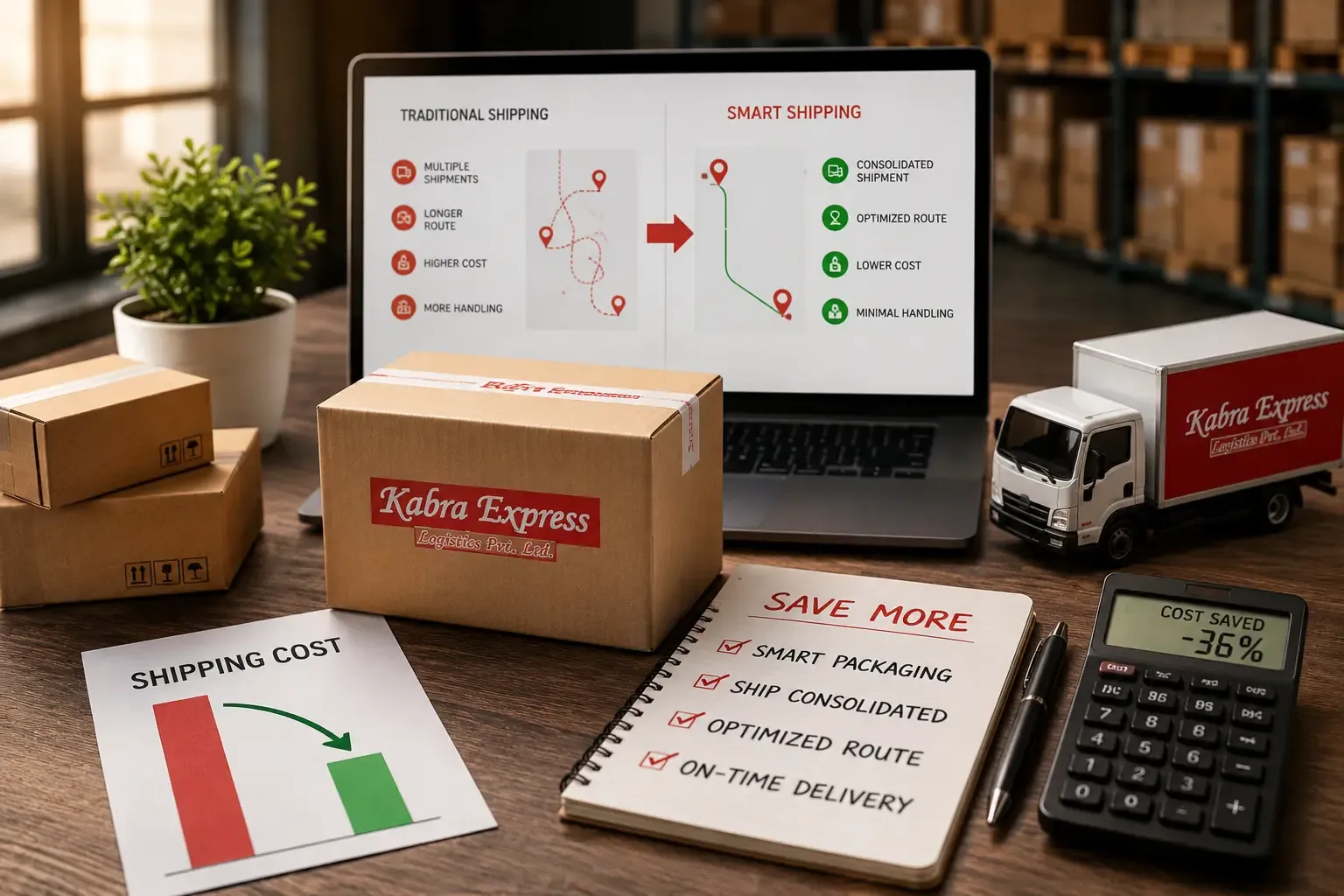
Shipping costs can quietly eat into your profit margins — and for SMEs, e-commerce sellers, and logistics entrepreneurs operating in India's competitive market, every rupee counts. Whether you're fulfilling orders from Mumbai to Manipur or managing last-mile delivery across Tier-2 cities, choosing the best parcel service in India is only half the battle. The other half? Making sure you're not overpaying for it.
In this guide, we break down practical, actionable strategies to reduce your shipping expenses without compromising on speed, reliability, or customer satisfaction.
Why Shipping Costs Are a Major Pain Point for Indian Businesses
India's logistics landscape is vast and complex. With over 19,000 pin codes and diverse terrain, delivery costs vary wildly across regions.
For small and mid-size businesses, shipping often accounts for 10–20% of total operational costs. That figure climbs even higher when you factor in return logistics, failed deliveries, and cash on delivery reconciliation delays.
Understanding where your money goes is the first step to controlling it.
1. Choose the Right Parcel Partner — Not Just the Cheapest One
It's tempting to pick the lowest-priced courier and call it a day. But a cheap service that misses delivery timelines or loses parcels costs you far more in customer returns, refunds, and lost trust.
When evaluating the best parcel service in India for your business, look beyond the base rate and compare:
- Delivery success rate (especially for Tier-2 and Tier-3 cities)
- Real-time tracking capabilities
- Return management efficiency
- Customer support responsiveness
- Integration with your e-commerce platform
A slightly higher per-shipment cost with a reliable partner often delivers better ROI than bargain-priced chaos.
2. Negotiate Volume-Based Pricing
One of the most underutilized levers for Indian SMEs is volume negotiation. Most logistics companies offer tiered pricing — the more you ship, the less you pay per parcel.
If you're currently shipping 200–500 parcels a month, you likely qualify for negotiated rates. Don't wait for the courier to offer it; proactively reach out and ask.
Tips for better negotiation:
- Share 3–6 months of shipping data to demonstrate consistent volume
- Bundle multiple service types (standard, express, reverse) under one contract
- Ask for zone-wise pricing to reduce charges on high-volume routes
3. Optimize Your Packaging to Reduce Dimensional Weight Charges
Many couriers — especially those offering an express delivery service — charge based on volumetric (dimensional) weight, not just actual weight. This means a large, light box can cost more to ship than a compact, heavier one.
Reducing package size without compromising product safety is one of the fastest wins available to any seller.
Practical steps:
- Use right-sized boxes — avoid excess void fill
- Switch to poly mailers for soft goods and apparel
- Audit your top 10 SKUs and redesign packaging where feasible
- Use packaging calculators to estimate volumetric weight before dispatch
Even a 10% reduction in average parcel dimensions can translate into significant monthly savings.
4. Streamline Your Cash on Delivery (COD) Operations
Cash on delivery service remains the dominant payment mode in India, particularly in Tier-2 and Tier-3 cities. While it boosts conversion rates and customer trust, COD also introduces additional costs — including higher return-to-origin (RTO) rates and delayed fund remittance.
Here's how to make COD work for you rather than against you:
- Verify COD orders via IVR or WhatsApp before dispatching — this alone can reduce RTO by 20–30%
- Choose a courier with faster COD remittance cycles (daily or next-day remittance keeps your cash flow healthy)
- Track COD-specific RTO rates by pin code and blacklist consistently failing zones
- Offer small incentives (discounts or freebies) to encourage prepaid payment — this reduces your COD exposure over time
Managing COD smartly is often the difference between a profitable month and a cash-flow crisis.
5. Use a Multi-Courier Strategy with a Logistics Aggregator
Relying on a single courier for all your shipments is risky and often expensive. A smarter approach is to use a logistics aggregator platform that lets you access multiple courier partners through a single dashboard.
Aggregators automatically allocate shipments to the best-performing, lowest-cost courier for each route. This means you get competitive pricing and better delivery performance — without managing multiple vendor relationships manually.
What to look for in an aggregator:
- Access to 10+ courier partners including regional players
- Automated pin code serviceability checks
- Unified tracking for all shipments
- Consolidated billing and MIS reports
For supply chain managers and fleet operators managing high volumes, this single switch can reduce logistics costs by 15–25%.
6. Reduce Return-to-Origin (RTO) Rates Aggressively
RTO is one of the biggest hidden costs in Indian e-commerce logistics. Every undelivered parcel means you pay for forward shipping, return shipping, restocking, and lost time — often with zero revenue to show for it.
High RTOs are especially common with COD orders and shipments to remote pin codes.
To bring RTO rates down:
- Send proactive delivery alerts via SMS and WhatsApp at every stage
- Enable flexible delivery rescheduling for customers
- Use NDR (Non-Delivery Report) management tools to attempt re-delivery
- Analyze RTO patterns by courier, zone, and product type to find root causes
Bringing your RTO rate down from 20% to 12% can have a dramatic impact on your per-unit profitability.
7. Leverage Zone Skipping and Hub-and-Spoke Networks
If you ship large volumes to specific regions consistently, consider zone skipping — consolidating shipments and moving them in bulk to a hub closer to the delivery destination, then using local delivery for last-mile.
This strategy works particularly well for businesses with warehouses or fulfillment partners in multiple cities. It reduces the number of "long-haul" zones a parcel travels through, directly cutting your per-shipment cost.
Many of the best parcel services in India now offer assisted zone-skipping models for high-volume shippers. Ask your logistics partner if this option is available for your shipping lanes.
8. Use Technology to Automate and Monitor
Manual shipping operations are not just slow — they're expensive. Errors in address entry, missed pickups, and poor tracking visibility all add to your logistics costs indirectly.
Investing in the right tech stack pays off fast:
- Shipping management software that auto-selects courier based on rules
- Automated label generation to reduce errors and save staff time
- Analytics dashboards to monitor courier performance, RTO, and cost-per-order
- API integrations with your Shopify, WooCommerce, or ERP platform
Even small e-commerce sellers benefit enormously from automation once their order volumes cross 100 shipments per month.
Choosing the Best Parcel Service in India for Your Business Type
Not all businesses have the same shipping needs. Here's a quick guide to help you match your business type with the right service features:
- E-commerce Sellers — Priority: RTO reduction, COD remittance · Look for: NDR management, fast COD cycles
- SME Manufacturers — Priority: Bulk B2B shipping · Look for: Weight-based pricing, freight options
- Tier-2/3 Retailers — Priority: Wide serviceability · Look for: Regional couriers, strong last-mile
- Logistics Entrepreneurs — Priority: Margin per shipment · Look for: Aggregator access, volume discounts
- Supply Chain Managers — Priority: End-to-end visibility · Look for: API integration, real-time tracking
Matching your operational profile to the right courier features is as important as comparing rates.
Common Mistakes That Increase Your Shipping Costs
Even experienced shippers fall into these traps. Avoid them:
- Not auditing your courier invoices — billing errors are more common than you think
- Using express delivery service for every shipment — save express for time-sensitive orders only
- Ignoring pin code performance data — some zones have structural delivery problems; re-routing saves money
- Not renegotiating contracts annually — your volumes change, and your rates should too
- Treating returns as an afterthought — reverse logistics is a profit centre waiting to be optimized
Conclusion: Ship Smarter, Not Just Cheaper
Reducing shipping costs isn't about cutting corners — it's about working smarter within the system. From negotiating volume discounts and streamlining your cash on delivery service operations to leveraging technology and optimizing packaging, there are multiple levers you can pull simultaneously.
The goal is to partner with the best parcel service in India that aligns with your business's specific needs — and then extract maximum efficiency from that partnership through data, negotiation, and process improvement.
Whether you're a first-time e-commerce seller in Surat or a seasoned supply chain manager running pan-India operations, these strategies scale with you. Start with two or three changes today, measure the impact, and build from there. Your margins will thank you.