
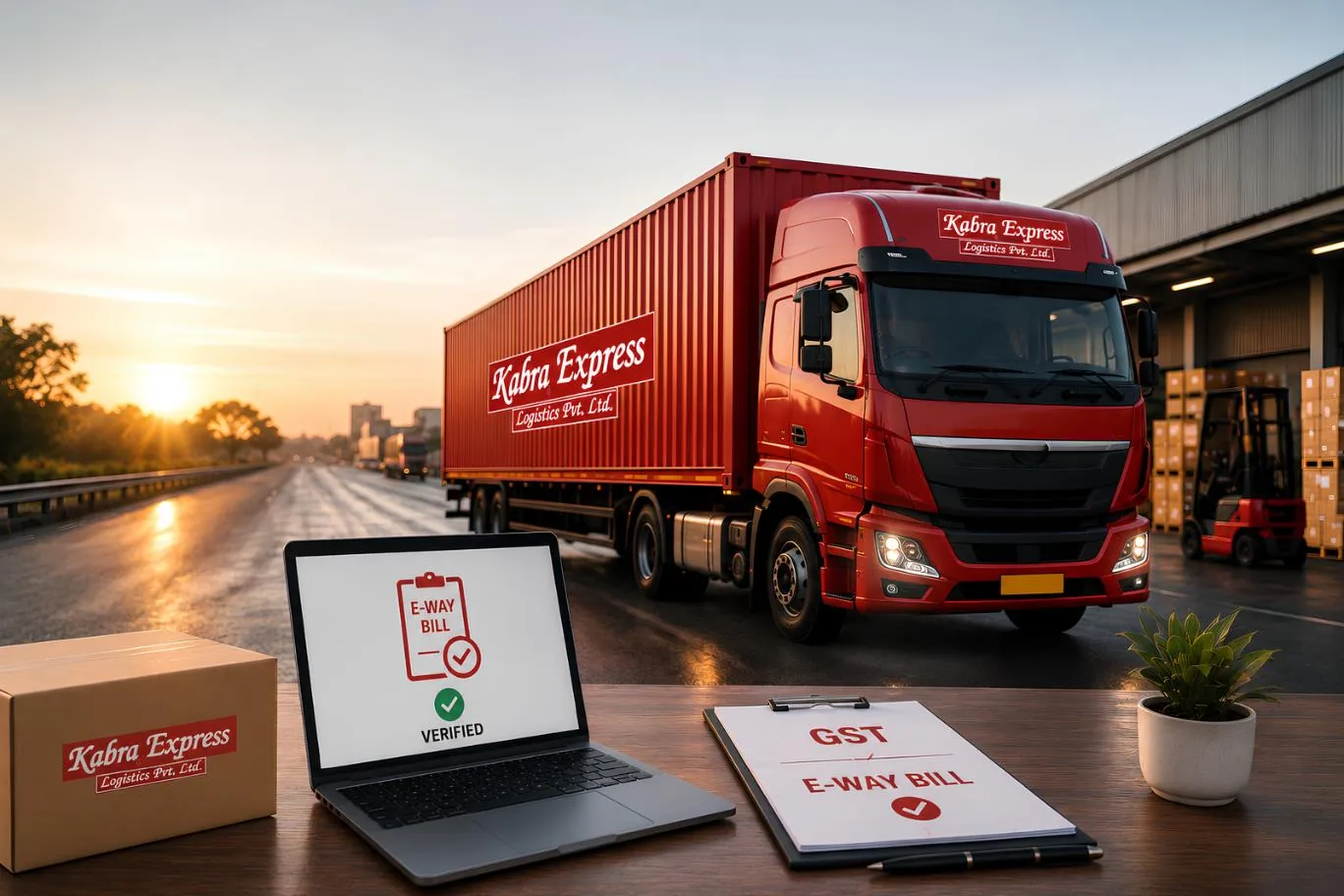
India's logistics industry has undergone a massive transformation over the last decade. Among the biggest catalysts for change have been the introduction of the Goods and Services Tax (GST) and the E-Way Bill system. These reforms not only streamlined interstate trade but also significantly reshaped less than truckload logistics, making transportation more efficient, transparent, and scalable.
For SME business owners, e-commerce sellers, fleet operators, logistics entrepreneurs, and supply chain managers, understanding this shift is crucial. The impact extends beyond compliance — it affects delivery speed, operational costs, route planning, and customer satisfaction.
In this article, we'll explore how GST and E-Way Bills revolutionised the logistics landscape and why businesses increasingly rely on part load transport service and modern truck transportation services to optimise their supply chains.
Understanding Less Than Truckload Logistics
Before GST, many businesses struggled with fragmented transportation systems and state-level tax barriers. This made moving smaller shipments across India complicated and expensive.
Less than truckload logistics (LTL) refers to the transportation of shipments that do not require an entire truck. Instead, multiple consignments from different customers share the same vehicle, helping businesses reduce transportation costs while maximising vehicle utilisation.
Key Benefits of LTL Logistics
- Lower freight costs
- Better vehicle utilisation
- Increased delivery flexibility
- Ideal for SMEs and e-commerce businesses
- Reduced environmental impact through optimised loads
Today, LTL has become one of the fastest-growing logistics segments in India, largely due to regulatory reforms and digitalisation.
The Logistics Landscape Before GST
Before the implementation of GST in 2017, India's logistics network faced numerous operational hurdles.
Multiple State Taxes
Transporters had to deal with:
- VAT
- Entry Tax
- Octroi
- Central Sales Tax (CST)
- Local levies and checkpoints
Each state had different rules, creating administrative complexity and delays.
Long Waiting Times at Borders
Trucks often spent hours — or even days — at interstate checkpoints for tax verification and documentation.
This led to:
- Increased fuel consumption
- Delivery delays
- Higher transportation costs
- Lower fleet productivity
Inefficient Warehouse Networks
Many companies established warehouses in multiple states primarily to manage tax obligations rather than improve logistics efficiency.
As a result:
- Warehousing costs increased
- Inventory remained scattered
- Supply chain visibility suffered
How GST Transformed Less Than Truckload Logistics
The introduction of GST created a unified national market by replacing multiple indirect taxes with a single taxation framework.
Elimination of Interstate Tax Barriers
One of GST's biggest achievements was removing state-level tax complexities.
For less than truckload logistics, this meant:
- Faster interstate movement
- Reduced documentation burden
- Simplified compliance procedures
- Improved route planning
Transporters could now focus on operational efficiency rather than navigating different state tax regulations.
Faster Transit Times
With checkpoints largely removed, trucks began spending significantly less time waiting at state borders.
Benefits included:
- Quicker deliveries
- Better asset utilisation
- Reduced fuel costs
- Increased trip frequency
Fleet operators could complete more trips with the same resources, improving profitability.
Consolidated Warehousing
GST encouraged businesses to redesign their warehouse networks based on operational efficiency instead of tax considerations.
This led to:
- Large regional distribution centres
- Reduced inventory carrying costs
- Faster order fulfilment
- Better integration with LTL networks
The result was a stronger ecosystem for part load transport service providers.
The Introduction of E-Way Bills
While GST simplified taxation, the E-Way Bill system digitised freight movement tracking.
Introduced in 2018, an E-Way Bill is an electronically generated document required for transporting goods above a specified value threshold.
The system contains details such as:
- Consignor information
- Consignee information
- Goods description
- Shipment value
- Vehicle details
This digital framework significantly improved transparency throughout the logistics chain.
How E-Way Bills Improved Less Than Truckload Logistics
The E-Way Bill system delivered tangible, day-to-day improvements for businesses that rely on less than truckload logistics.
Digital Documentation
Previously, transporters carried multiple paper documents that were susceptible to errors and delays.
E-Way Bills digitised this process, enabling:
- Faster verification
- Reduced paperwork
- Lower administrative burden
- Improved compliance management
For LTL operators managing multiple shipments in a single truck, this was a game-changing improvement.
Enhanced Shipment Visibility
Digital tracking provides greater visibility into freight movement.
Businesses can now:
- Monitor shipments in transit
- Reduce disputes
- Improve customer communication
- Strengthen supply chain planning
This visibility is particularly valuable for e-commerce sellers handling large volumes of small consignments.
Reduced Checkpoint Delays
Authorities can verify shipment information electronically.
As a result:
- Roadside inspections are faster
- Vehicle stoppages are minimised
- Delivery schedules become more predictable
This has significantly improved the efficiency of truck transportation services across India.
Benefits for SME Business Owners
Small and medium-sized enterprises have arguably benefited the most from these reforms.
Lower Transportation Costs
Shared transportation through LTL networks allows SMEs to move goods without paying for a full truck.
GST and E-Way Bills further reduce operational costs by:
- Eliminating unnecessary delays
- Simplifying compliance
- Increasing route efficiency
Expanded Market Reach
Businesses can now sell products across India more easily.
Advantages include:
- Faster interstate deliveries
- Simplified tax management
- Improved customer satisfaction
- Greater business scalability
This has opened new opportunities for manufacturers and traders operating from Tier-2 and Tier-3 cities.
Impact on E-Commerce Growth
India's e-commerce boom has been closely linked with improvements in logistics infrastructure.
Supporting High Shipment Volumes
Online sellers frequently ship small quantities to multiple destinations.
Less than truckload logistics provides the perfect solution by consolidating shipments and reducing transportation costs.
GST and E-Way Bills make these movements smoother by:
- Standardising compliance
- Improving tracking
- Reducing transit delays
Better Customer Experience
Modern consumers expect:
- Faster deliveries
- Real-time tracking
- Reliable service
The digital nature of E-Way Bills supports these expectations by enhancing shipment visibility throughout the journey.
Advantages for Fleet and Transport Operators
Transport businesses have also seen major operational gains.
Improved Fleet Utilisation
With fewer delays and faster turnaround times, operators can maximise vehicle productivity.
Benefits include:
- More trips per vehicle
- Higher revenue potential
- Reduced idle time
- Better resource utilisation
Data-Driven Operations
Digital compliance systems generate valuable operational data.
Transporters can use this information to:
- Optimise routes
- Forecast demand
- Improve load planning
- Enhance customer service
This has accelerated the modernisation of India's logistics industry.
Challenges That Still Exist
Despite substantial progress, certain challenges remain.
Compliance Complexity for Small Businesses
Many small enterprises still struggle with:
- E-Way Bill generation
- GST documentation
- Regulatory updates
Digital literacy and training remain important areas of focus.
Infrastructure Gaps
Road quality and transportation infrastructure continue to vary across regions.
Challenges include:
- Congested urban routes
- Rural connectivity issues
- Seasonal disruptions
Addressing these gaps will further strengthen India's logistics capabilities.
The Future of Less Than Truckload Logistics in India
The future of less than truckload logistics looks extremely promising.
Several trends are shaping the next phase of growth:
Technology Integration
Emerging technologies are driving greater efficiency through:
- AI-powered route optimisation
- Real-time fleet tracking
- Automated freight matching
- Predictive analytics
Growth of Logistics Platforms
Digital logistics marketplaces are making it easier for businesses to book part load transport service options quickly and transparently.
Increased Demand from Tier-2 and Tier-3 Markets
As digital commerce expands across India, demand for affordable and reliable truck transportation services will continue to rise.
This will further strengthen LTL networks and improve nationwide connectivity.
Conclusion
The introduction of GST and E-Way Bills marked a turning point for India's logistics sector. Together, these reforms removed interstate trade barriers, reduced transit delays, improved transparency, and accelerated digital adoption across the supply chain.
For businesses relying on less than truckload logistics, the benefits have been substantial — from lower costs and faster deliveries to improved compliance and greater market access. Whether you're an SME owner, e-commerce seller, transport operator, or supply chain manager, leveraging modern part load transport service solutions and efficient truck transportation services can help you stay competitive in an increasingly connected economy.
As India's logistics ecosystem continues to evolve, businesses that embrace technology-driven LTL solutions will be best positioned for long-term growth and operational excellence.